
Fiber Optics: Preventing Settlement of Backfill
In road infrastructure and engineering structures, certain types of damage remain hidden for a long time before becoming critical. This is particularly true of embankment settlement, a gradual process that can cause lasting damage to a structure without any immediately apparent signs.
Today, fiber-optic sensing technologies make it possible to predict these ground movements with unprecedented accuracy. Using optical fibers as sensors enables continuous monitoring of sensitive structures.
What is a backfill, and why is it important to monitor it?
An embankment is a structure made of fill material (soil, aggregates, compacted materials) used to create a stable foundation beneath a road, a railroad track, or at the base of a bridge.
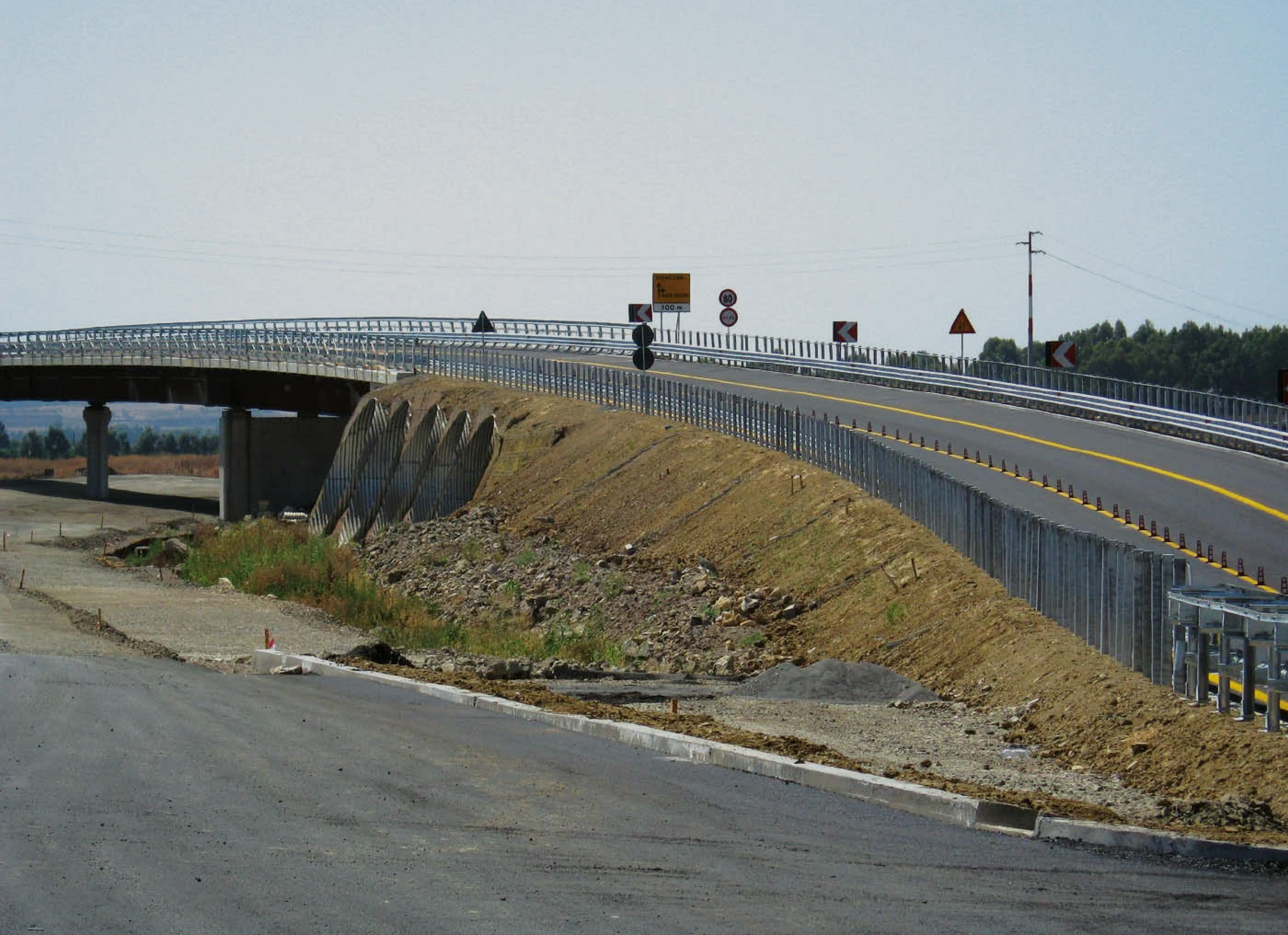
In the case of a bridge, the embankments on either side of the structure play a crucial role in maintaining the continuity of the roadway and distributing loads. Over time, however, these materials can settle due to traffic, water fluctuations, or mechanical stresses.
This settlement phenomenon can have several consequences:
• Localized subsidence of the roadway,
• Gradual deformation of the infrastructure,
• Risks to user safety,
• Or significant maintenance and repair costs.
The stakes are therefore high: detecting ground movement early enough to take action before visible damage occurs.

Fiber Optic Sensing: A Case Study on the Monitoring of a Bridge Embankment Using Fiber Optics
As part of a project to monitor a road embankment located near a bridge, the objective was clear: to install monitoring equipment capable of tracking settlement over time and anticipating any risk of road subsidence.
To address this issue, a distributed fiber-optic measurement system was deployed directly within the embankment.
This fiber-sensing technology is based on a Brillouin backscatter interrogation system, combined with a DTSS (Distributed Temperature and Strain Sensing) instrument. It enables continuous measurement of mechanical changes along a fiber-optic cable installed within the structure.
Optical fiber as a sensor: How does settlement detection work?
The principle is simple but extremely effective.
When the ground settles, the fiber-optic cable stretches. This deformation alters the properties of the light signal traveling through the fiber.
The DTSS system then analyzes these variations using the Brillouin backscattering phenomenon, enabling:
• Detect cable deformations,
• Pinpoint the affected areas,
• Quantify the extent of settlement,
• And ensure continuous monitoring over time.
Unlike traditional point sensors, optical fiber provides a measurement distributed along the entire length of the instrumented section. This provides a comprehensive and detailed view of the behavior of the embankment.

The Benefits of Fiber Optic Sensing for Geotechnical Monitoring
The use of fiber optics in infrastructure monitoring offers several major benefits.
First and foremost, this technology enables the early detection of ground movements, even before any damage becomes visible on the surface. This ability to anticipate issues directly contributes to improving the safety of structures and reducing the need for emergency interventions.
Distributed monitoring also provides highly accurate location data for these phenomena. This allows operations teams to focus on critical areas and track changes over time.
Finally, continuous monitoring facilitates predictive maintenance of infrastructure and helps keep operating costs under control.
Support from planning through implementation
At Jenoptec NT, our Innovation & Development team works with project owners, engineering firms, and infrastructure operators to design fiber-optic monitoring solutions.
Our support covers the entire project:
• Needs analysis and understanding of on-site constraints,
• Definition of the instrumentation strategy,
• Selection of appropriate technologies,
• Integration of optical sensors and measurement systems,
• Support for teams.
Every infrastructure project has its own specific challenges. That is why we develop customized solutions tailored to the technical, operational, and economic requirements of each project.
The goal remains the same: to provide reliable tools for ensuring the long-term safety of structures and enabling informed decision-making based on field data.
Do you have an infrastructure monitoring project? Our teams can help you implement a solution tailored to your instrumentation and fiber sensing needs.
📩 support-et-etude@jenoptec.com

D’AUTRES ACUATLITÉS QUI POURRAIT VOUS INTÉRESSER
Fiber Optics: Preventing Settlement of Backfill
Le
In road infrastructure and engineering structures, certain types of damage...
LIRE LA SUITE
April’s Featured Employee: : Asvinth RAGUNAN, quality engineer (work-study program)
Le
In road infrastructure and engineering structures, certain types of damage...
LIRE LA SUITE
March’s Featured Employee: Antony FLORES, Production Worker
Le
In road infrastructure and engineering structures, certain types of damage...
LIRE LA SUITE